Salmon and Dill Sauce (Easy Greek Yogurt Sauce)
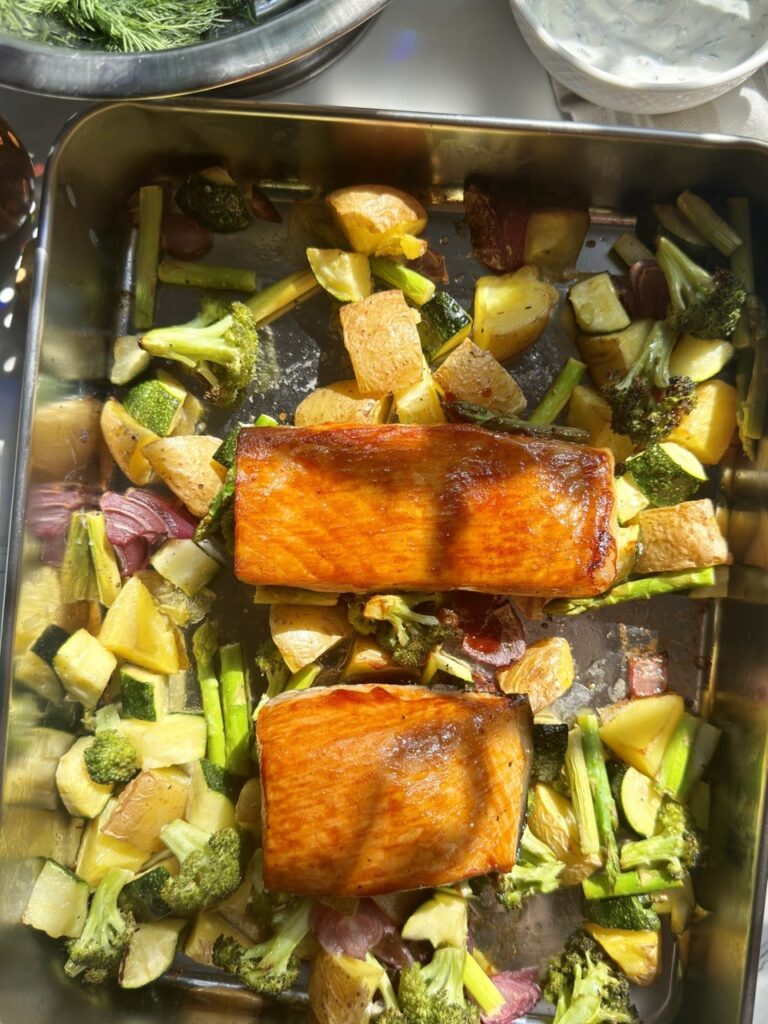
This salmon and dill sauce is an easy one-pan dinner with glazed salmon, roasted potatoes, broccoli, zucchini, red onion, and asparagus, all served over a creamy Greek yogurt dill sauce.
I love the contrast in this recipe. The salmon is warm and savory with a simple soy and paprika glaze, while the yogurt sauce underneath is cool, fresh, and slightly tangy from the lemon. The vegetables make it a complete meal, so you don’t need to prepare a separate side dish.
The trick is to add everything to the baking sheet in stages. The potatoes get a head start, the salmon and softer vegetables go in next, and the asparagus is added at the end. This way, everything finishes cooking at about the same time.
If you enjoy easy salmon dinners like this one, you may also love my Baked Salmon with Potatoes and Broccoli in Creamy Sauce. It’s another simple oven-baked meal with plenty of vegetables and a creamy finish.
Why You’ll Love This Recipe
- It’s a complete dinner made on one baking sheet.
- The Greek yogurt dill sauce is creamy but still fresh and light.
- The salmon only needs a few simple ingredients for the glaze.
- You get plenty of colorful roasted vegetables in every serving.
- Most of the cooking happens in the oven.
- It’s easy enough for a weekday dinner but looks beautiful when served.
For another colorful salmon dinner, try my Baked Salmon with Potatoes, Olives and Sun-Dried Tomatoes. It has the same easy dinner feel with Mediterranean-inspired flavors.
Ingredients You’ll Need
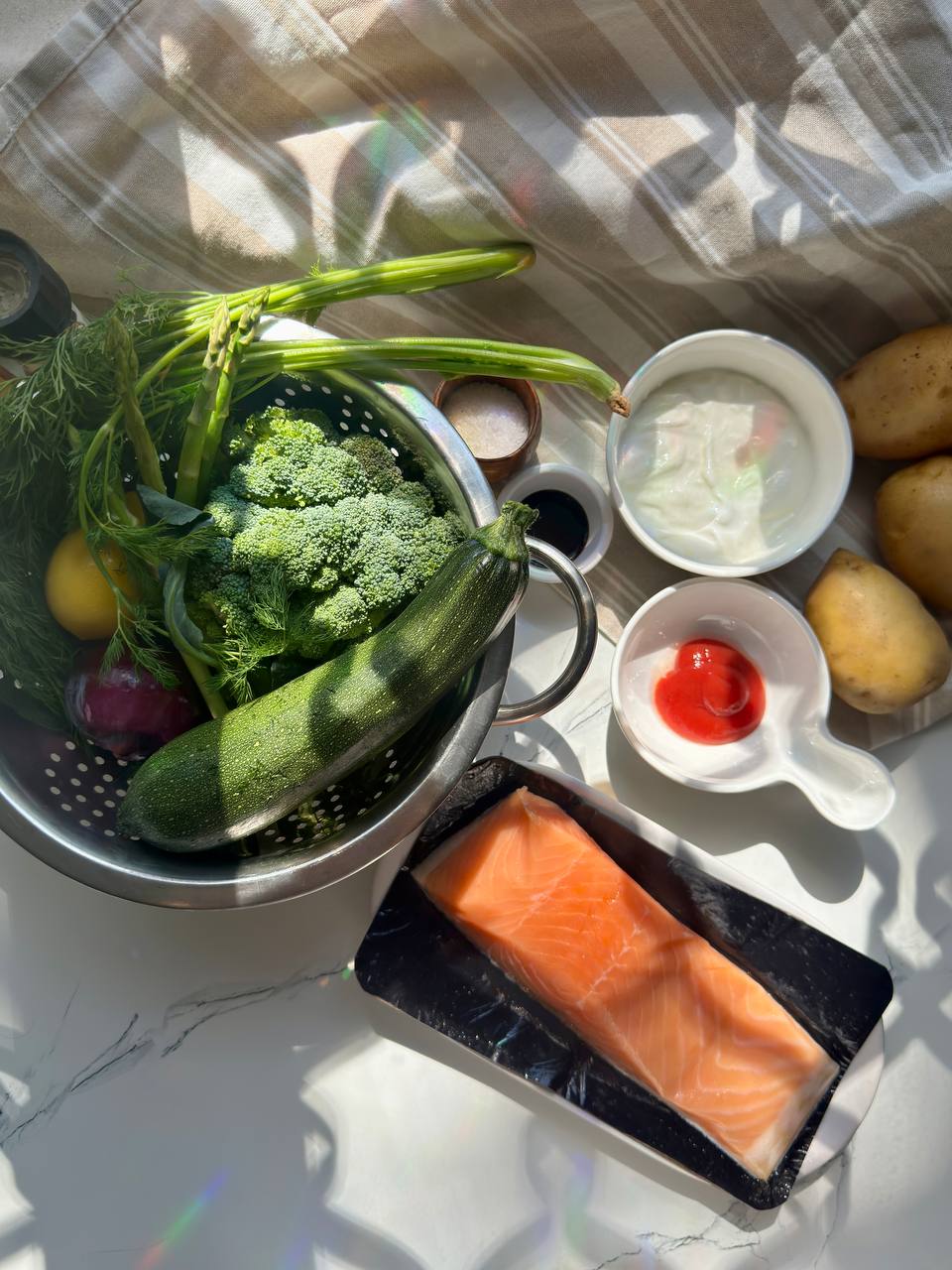
You only need simple ingredients to make this baked salmon with dill sauce and roasted vegetables.
For the Salmon
- Salmon
- Ketchup
- Soy sauce
- Olive oil
- Paprika
- Dried garlic
For the Vegetables
- Potatoes
- Red onion
- Broccoli
- Zucchini
- Asparagus
- Olive oil
- Lemon
- Salt
- Black pepper
For the Greek Yogurt Dill Sauce
- Greek yogurt
- Fresh dill
- Lemon juice
- Salt
- Black pepper
For exact ingredient amounts and full instructions, see the recipe card below.
How to Make Salmon and Dill Sauce
1. Prepare the Vegetables
Preheat the oven to 200°C (390°F).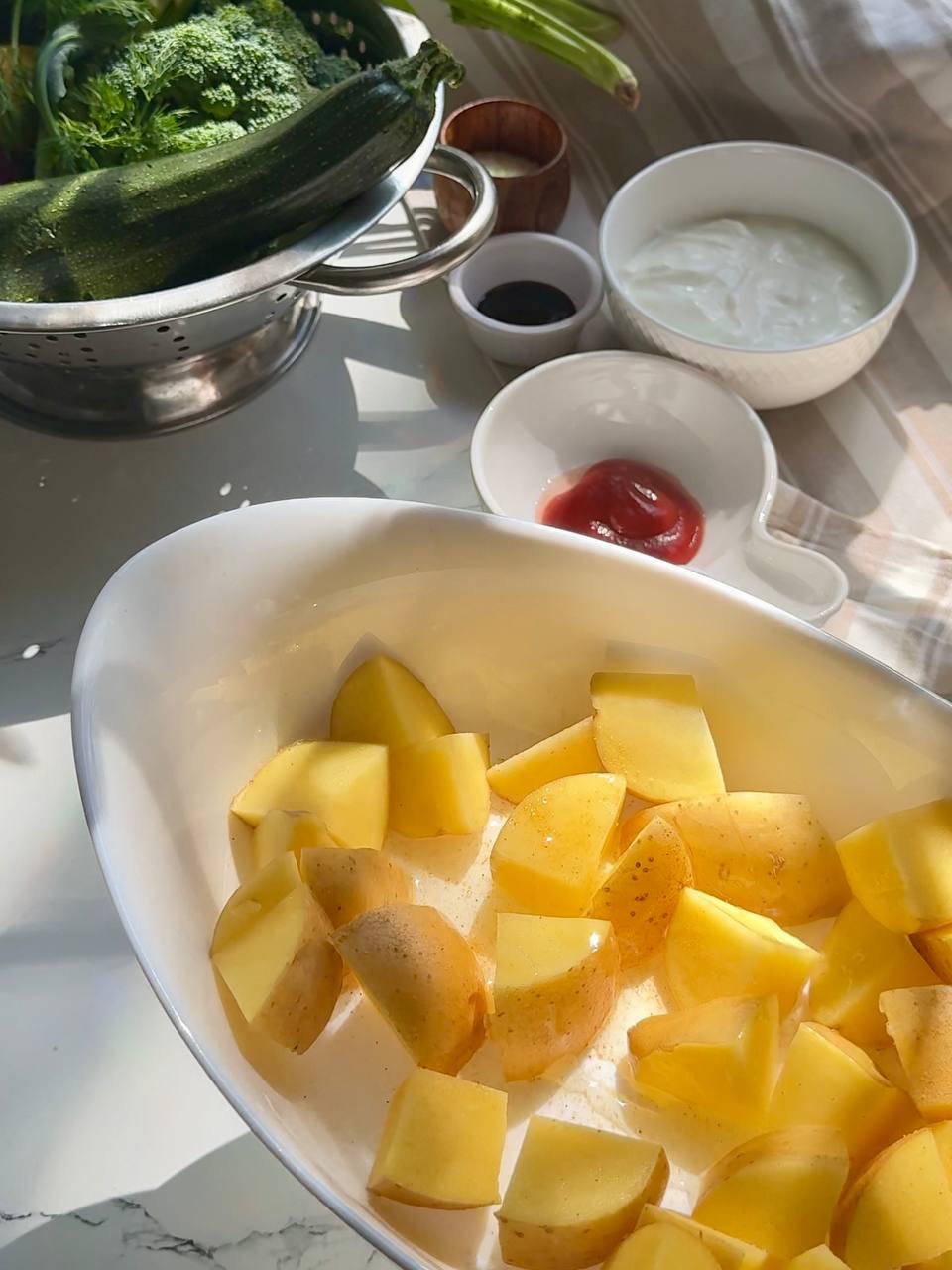
Trim the tough ends from the asparagus and cut each spear into about three pieces. Season the asparagus with a little lemon juice, salt, and black pepper and set aside for later.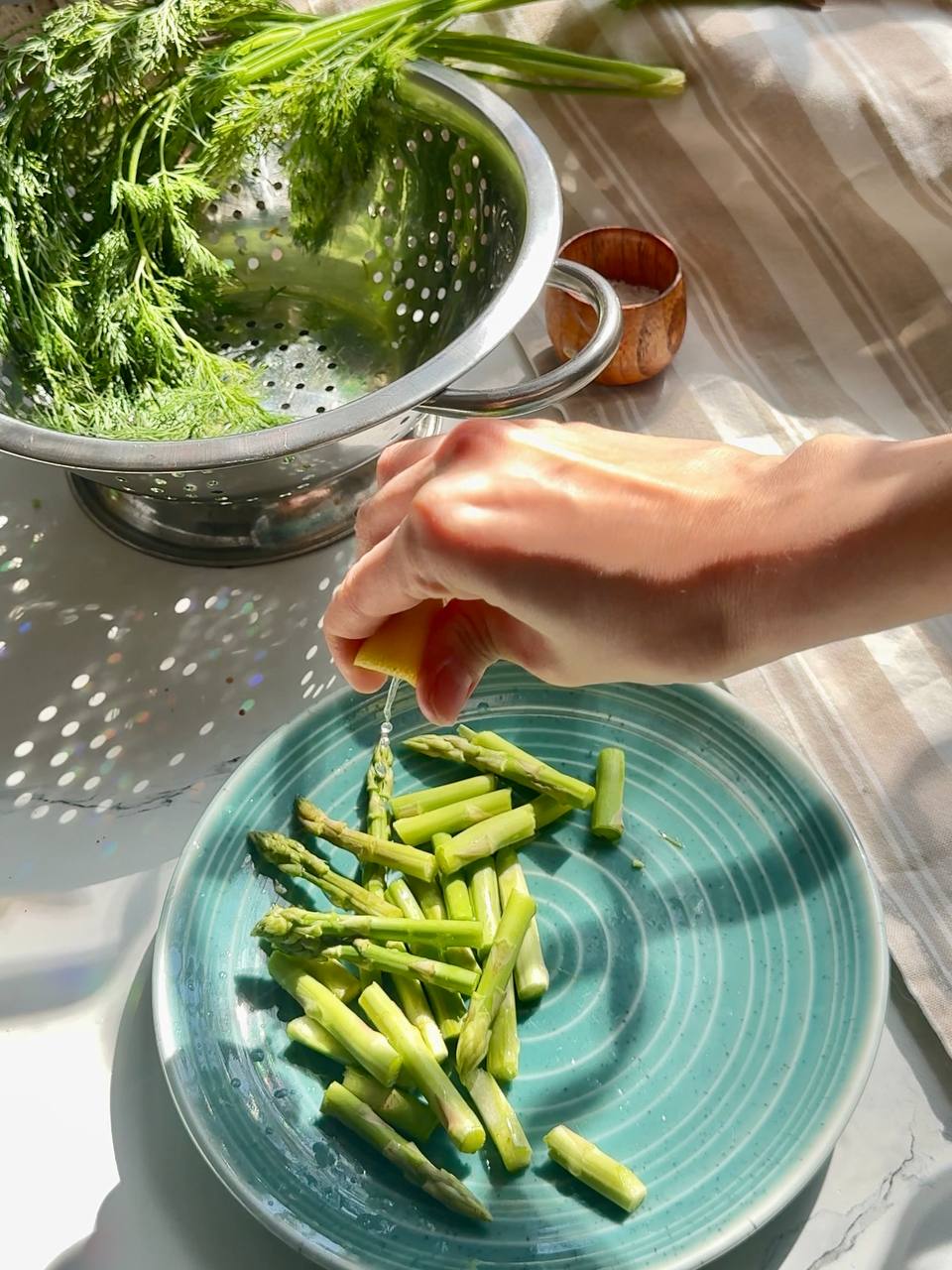
2. Start with the Potatoes and Red Onion
Lightly grease a large baking sheet with olive oil.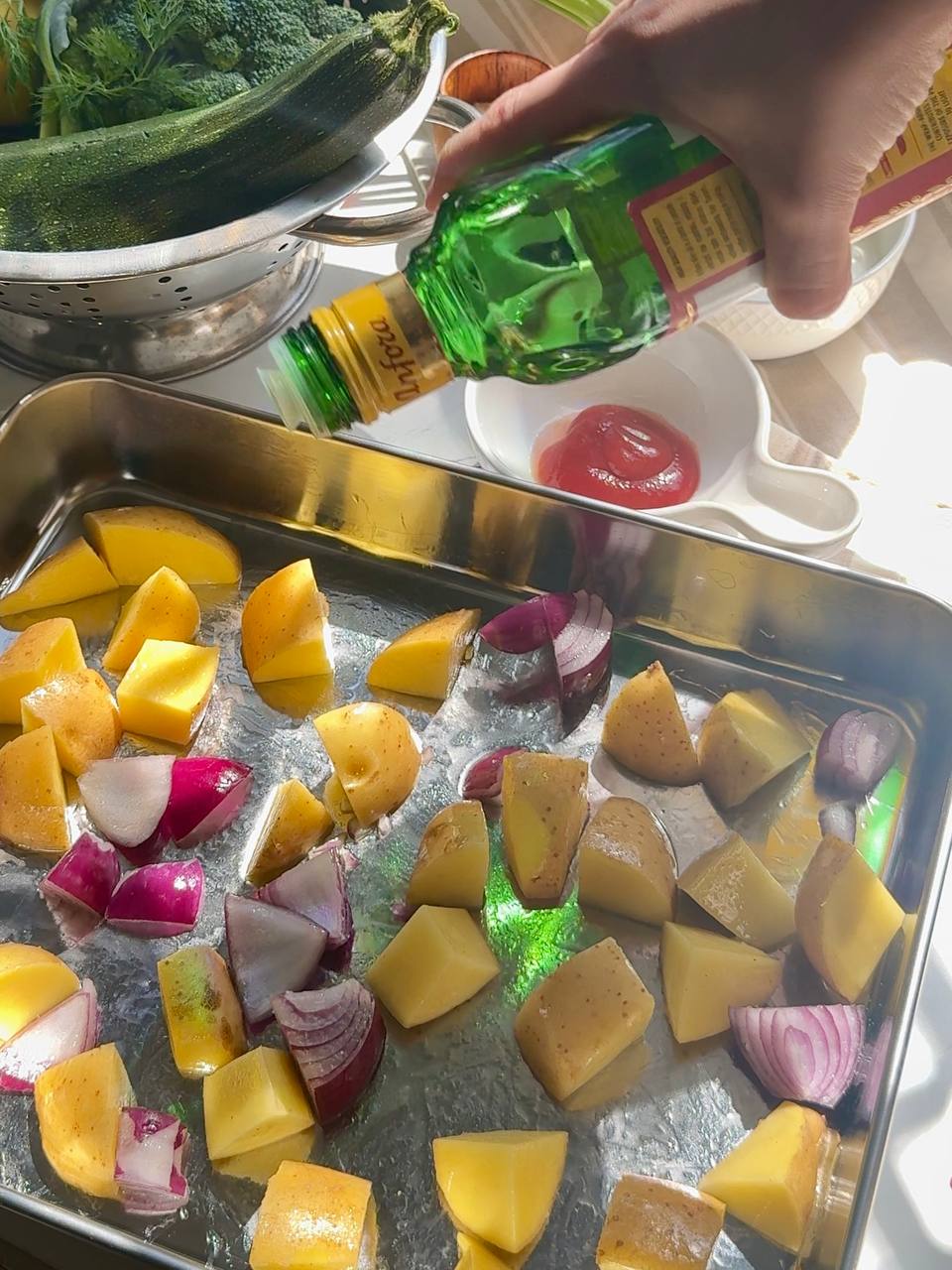
Arrange the potatoes and red onion on the baking sheet. Place the potatoes cut-side down where possible — this helps them develop a nicely roasted surface.
Drizzle with a little olive oil and season to taste.
Bake for 15 minutes.
3. Make the Salmon Glaze
While the potatoes are in the oven, prepare the glaze for the salmon.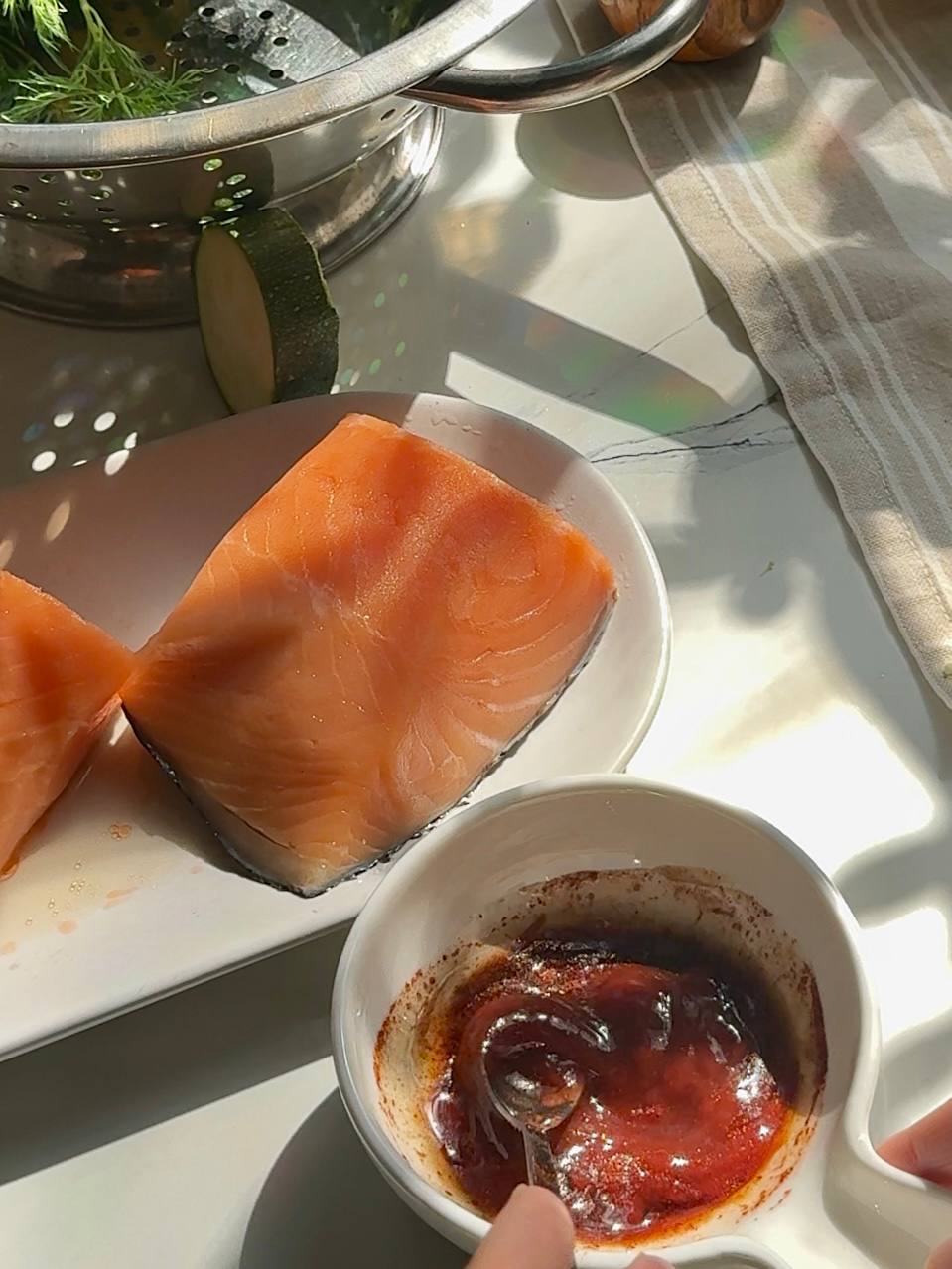
Mix the ketchup, soy sauce, olive oil, paprika, and dried garlic until combined.
Cut the salmon into two large portions if needed. Brush the salmon generously with the glaze, reserving a little for later.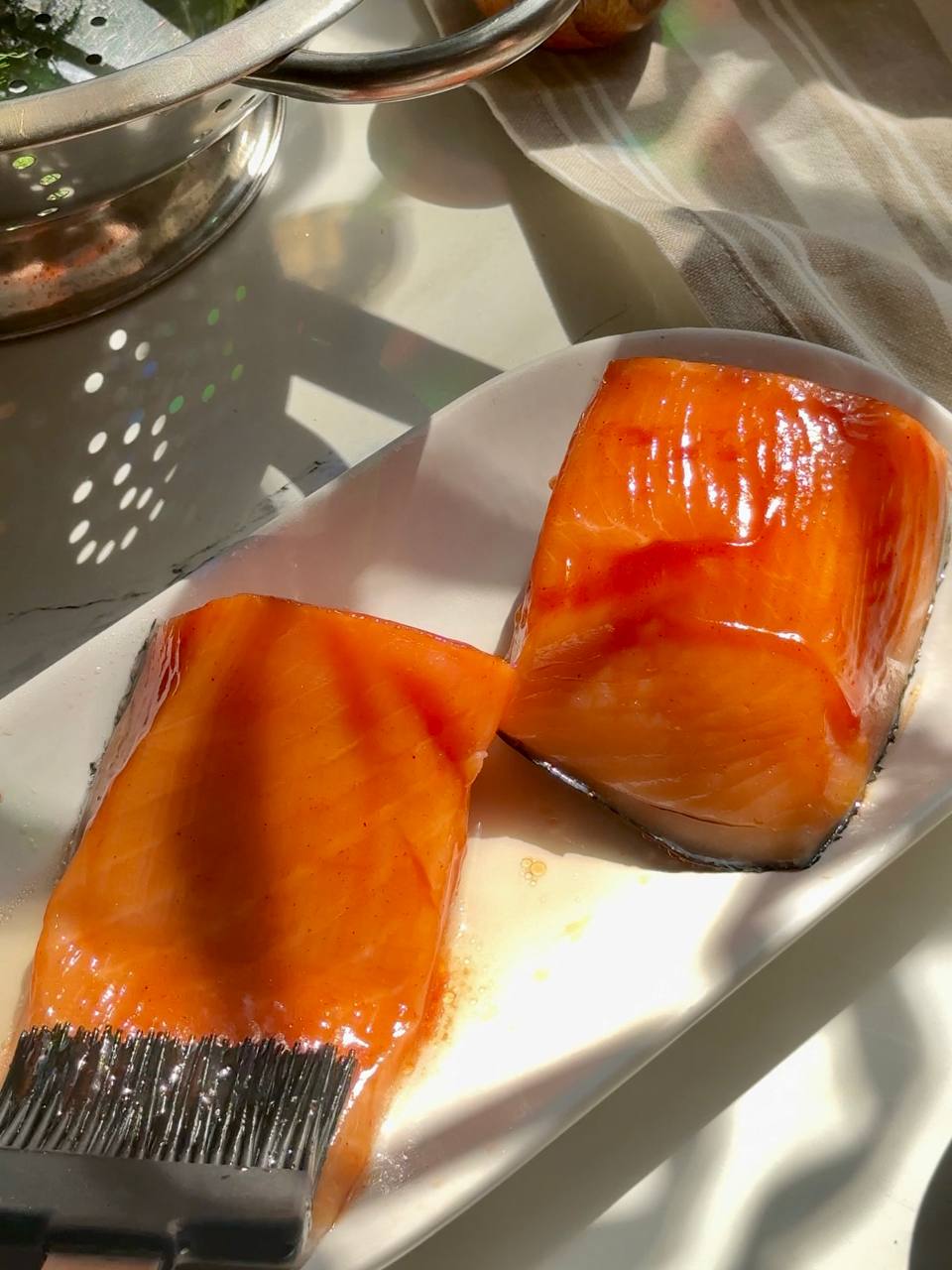
4. Add the Salmon and Vegetables
Add the broccoli and zucchini and drizzle them lightly with olive oil. Arrange the glazed salmon portions on the baking sheet with the vegetables.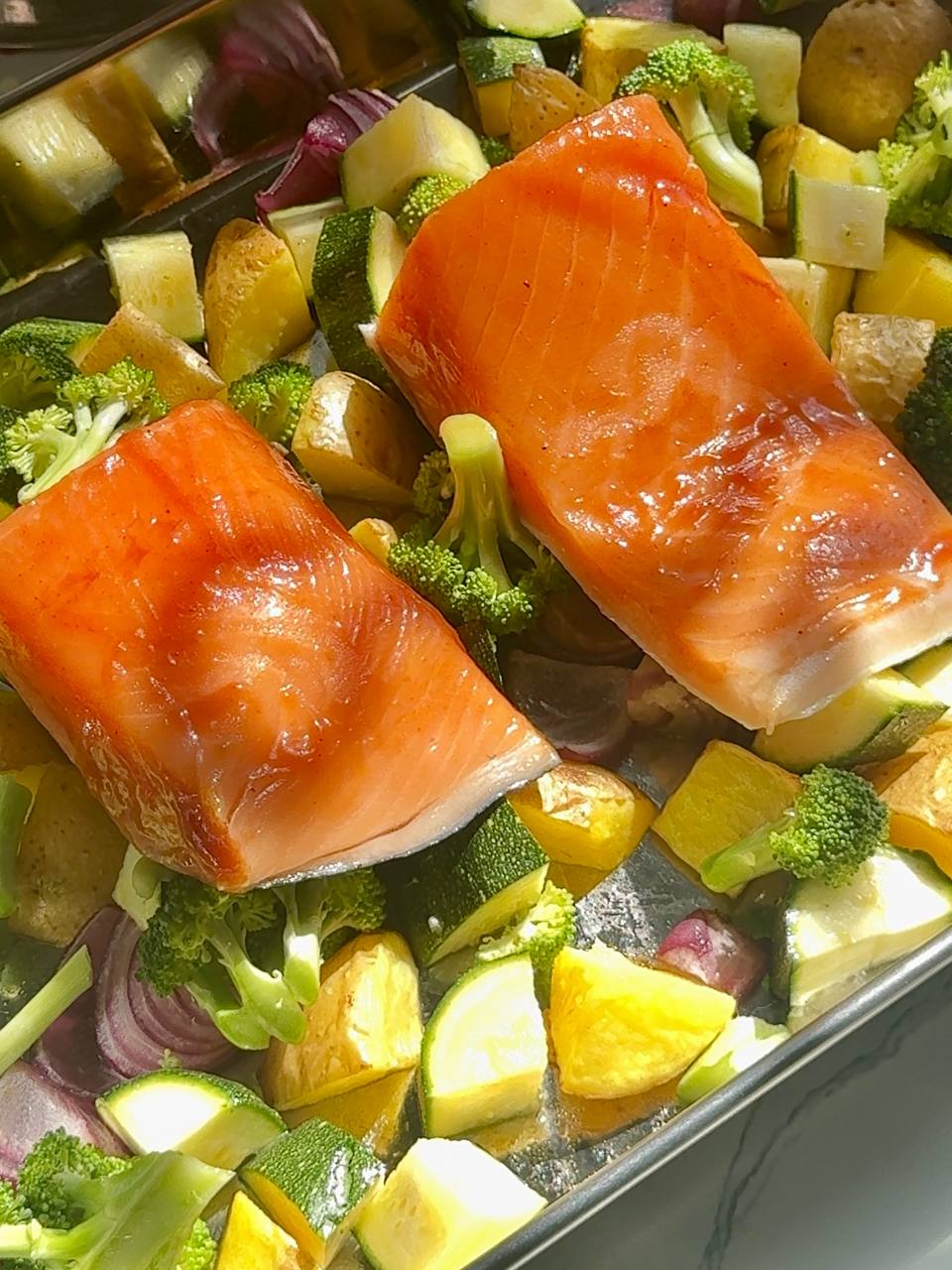
Return the pan to the oven and bake for 7 minutes.
5. Add the Asparagus
Remove the baking sheet from the oven again and add the prepared asparagus.
Brush the salmon with the remaining glaze, then return everything to the oven for another 8 minutes, or until the salmon is cooked through and the vegetables are tender.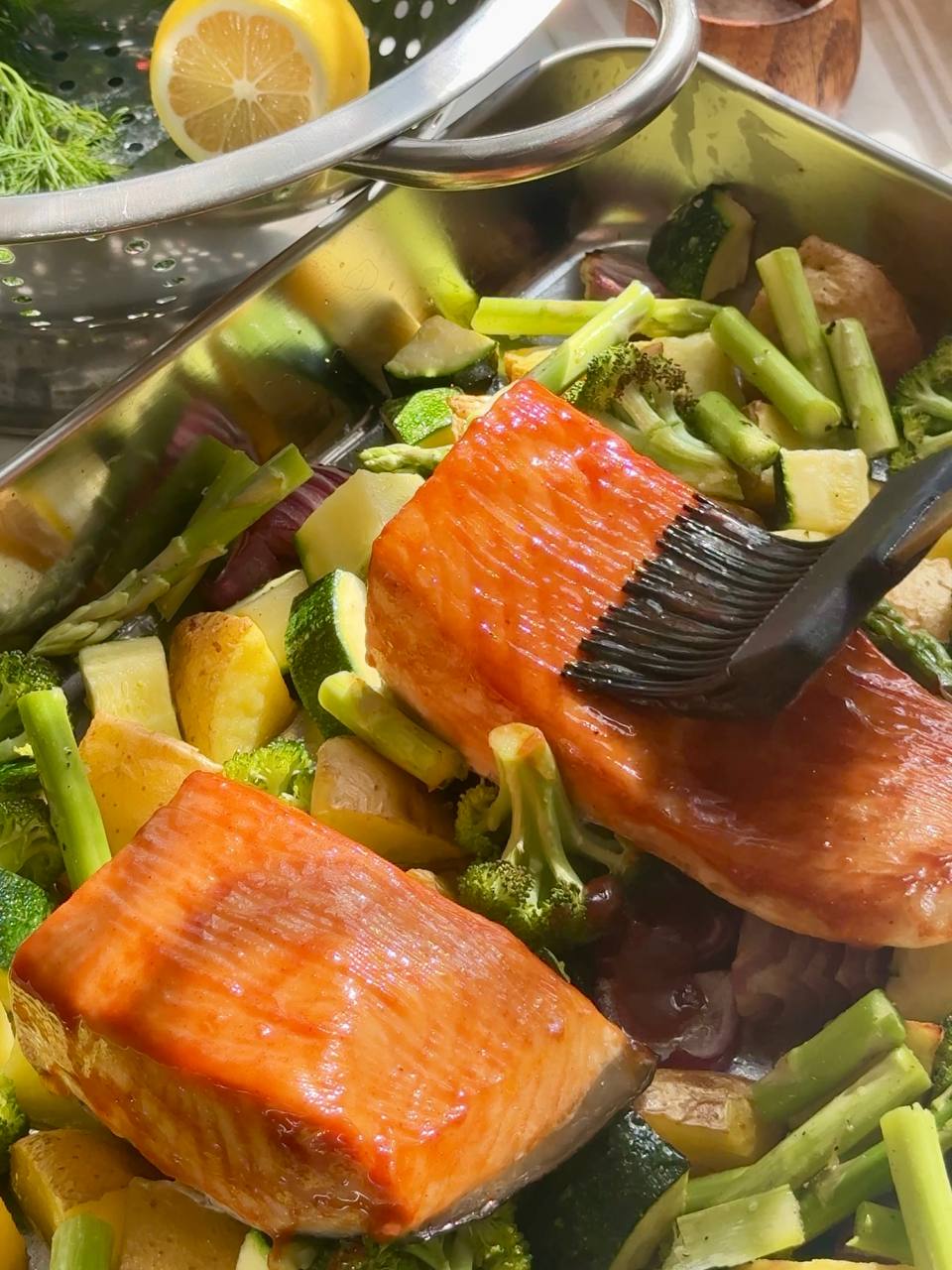
🥔 Add the Vegetables in Stages
One baking sheet doesn’t mean everything needs to go into the oven at the same time.
Potatoes need much longer to roast than salmon, zucchini, and asparagus, so giving them a head start helps everything finish cooking at about the same time.
Tip: Keep the zucchini fairly chunky and add the asparagus only for the final part of baking so the vegetables don’t become too soft.
6. Make the Greek Yogurt Dill Sauce
While the salmon finishes baking, make the Greek yogurt dill sauce for salmon.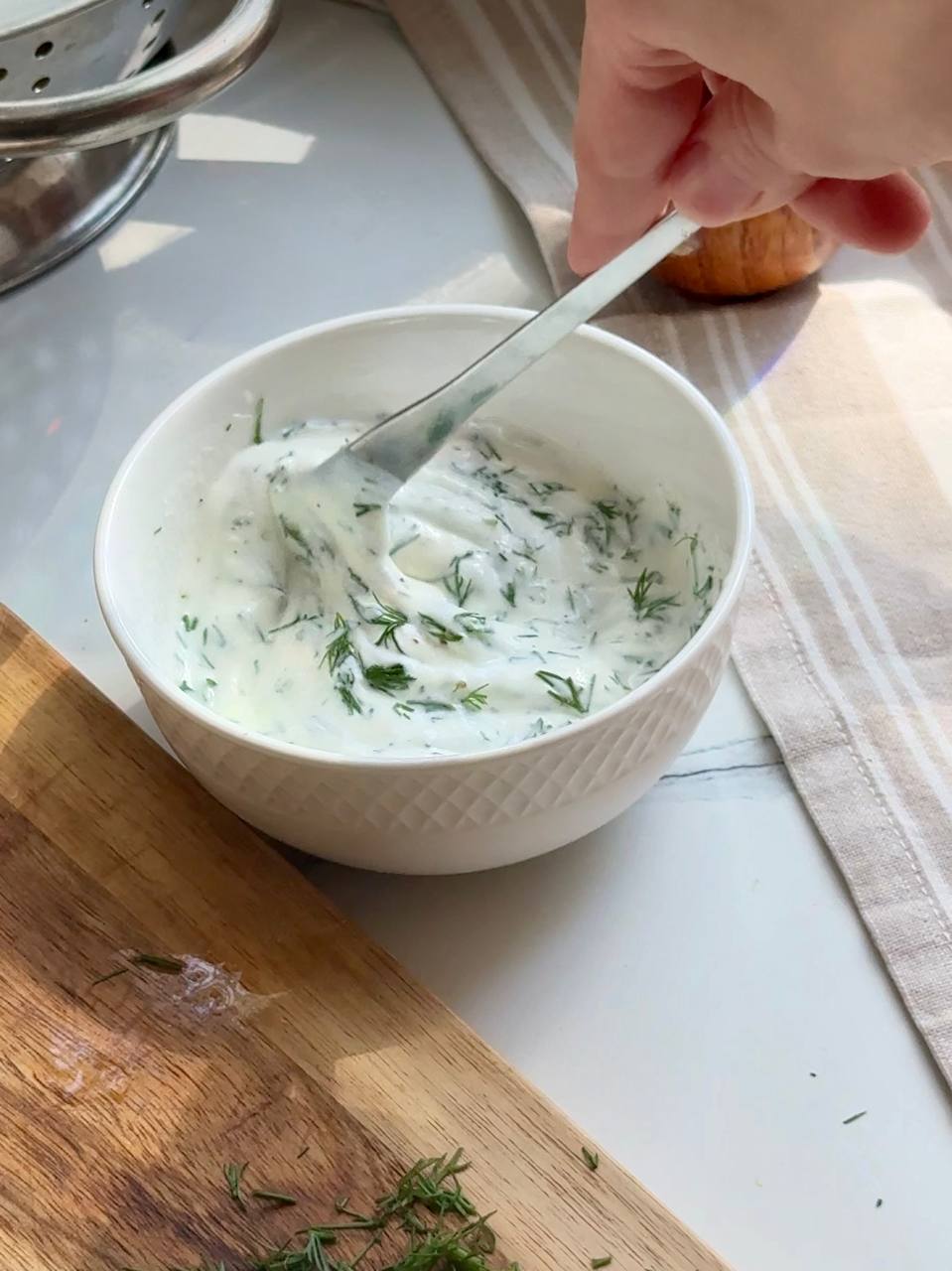
Combine the Greek yogurt with chopped fresh dill and lemon juice. Season with salt and freshly ground black pepper to taste.
Stir until creamy, then taste and add a little more lemon juice if you prefer a brighter, tangier sauce.
7. Assemble the Plates
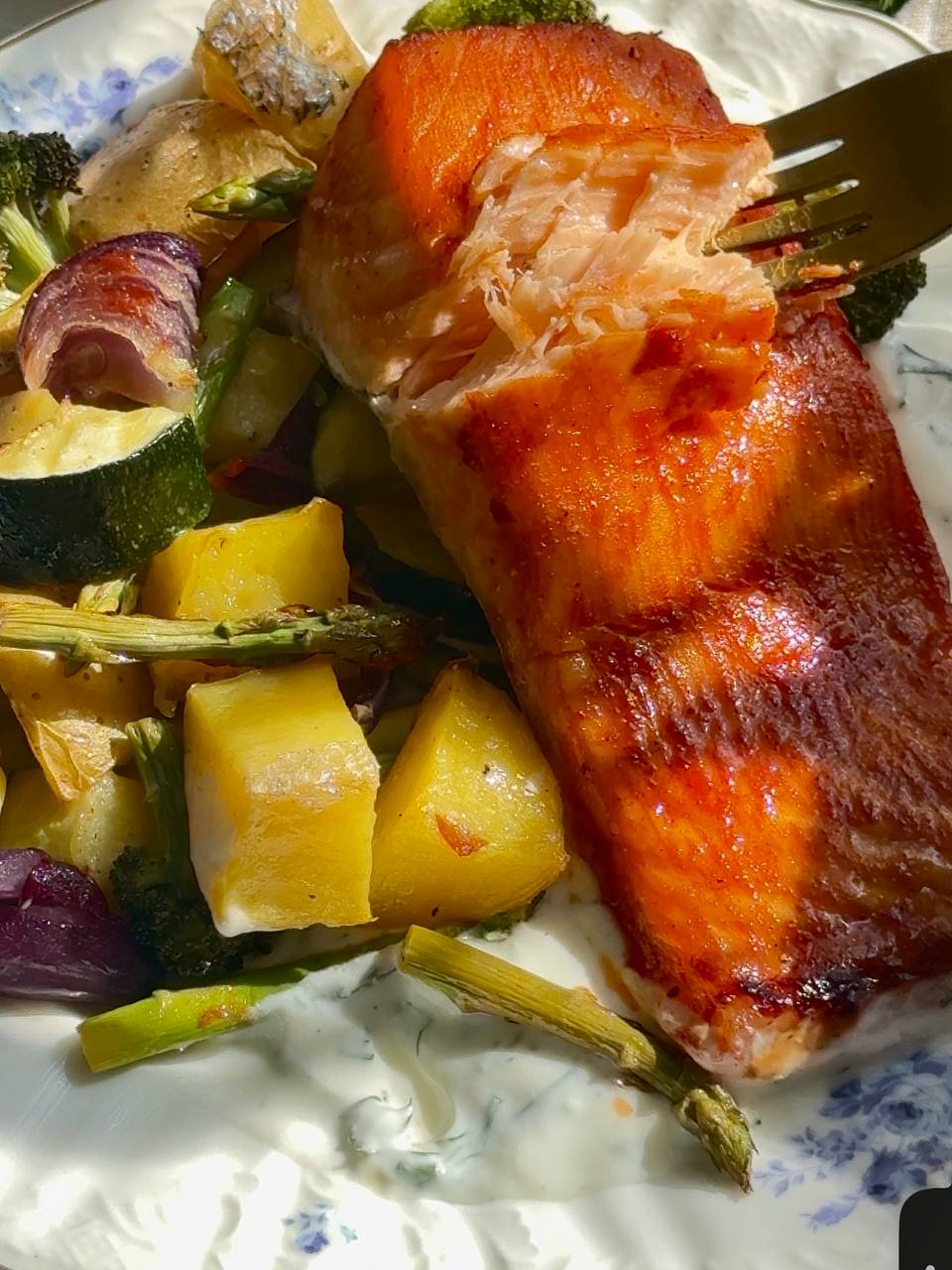
Spread a generous layer of the creamy dill sauce over each serving plate.
Arrange the roasted potatoes and vegetables over the sauce, then place a piece of salmon on top.
Serve immediately while the salmon and vegetables are warm and the yogurt sauce is cool.
If you prefer a richer sauce, my Creamy Garlic Butter Salmon with Vegetables is another easy way to serve salmon and vegetables together.
Why Greek Yogurt Dill Sauce Works So Well with Salmon
Salmon is naturally rich, which makes fresh, slightly acidic flavors a great match for it.
This creamy dill sauce for salmon is made with Greek yogurt instead of cream, giving it a thick and creamy texture without making the finished dish feel too heavy. Fresh dill adds plenty of flavor, while lemon juice gives the sauce a little brightness.
I especially like serving the sauce underneath the salmon rather than pouring it over the top. You still get the beautiful glazed surface of the fish, while every bite can pick up a little of the cool yogurt sauce from the plate.
Tips for the Best Salmon and Dill Sauce
Choose similarly sized salmon portions. Pieces of a similar thickness are more likely to finish cooking at the same time.
Keep some glaze for later. Brushing the salmon again before the final few minutes of baking adds another layer of flavor.
Use fresh dill for the sauce. Since the sauce has only a few ingredients, fresh dill makes a noticeable difference.
Don’t cut the zucchini too small. Chunky pieces hold their shape better during roasting.
Taste the sauce before serving. Different Greek yogurts vary in acidity, so adjust the lemon juice, salt, and pepper to your taste.
Keep an eye on the salmon. The exact cooking time can vary slightly depending on the thickness of your portions.
Variations and Substitutions
This salmon with dill sauce is easy to adapt depending on what vegetables you have.
You can swap broccoli for cauliflower or green beans, or add bell peppers or cherry tomatoes. Just remember that harder vegetables need more time in the oven, while softer vegetables should be added later.
You can also add a little finely grated lemon zest to the dill yogurt sauce if you want a stronger citrus flavor.
If your Greek yogurt is very thick, stir in a small amount of lemon juice until the sauce reaches the consistency you like.
You can also serve the salmon with Crispy Smashed Potatoes with Parmesan for an extra crispy side.
Frequently Asked Questions
Can I Make the Dill Sauce Ahead of Time?
Yes. You can prepare the Greek yogurt dill sauce ahead of time and keep it covered in the refrigerator until you’re ready to serve. Give it a quick stir before plating.
Can I Use Dried Dill?
You can, but fresh dill is much better in this recipe. The fresh herb is one of the main flavors in the sauce and gives it a brighter taste.
Can I Use Regular Yogurt Instead of Greek Yogurt?
Yes, although the sauce will be thinner. Greek yogurt creates the thick, creamy consistency that works particularly well when the sauce is spread directly onto the plate.
Why Do the Potatoes Go Into the Oven First?
Potatoes take much longer to cook than salmon and the other vegetables. Giving them a 15-minute head start means they can become tender without having to overcook the salmon.
Can I Use Different Vegetables?
Absolutely. This recipe works well with many vegetables. Simply add firm, slow-cooking vegetables earlier and quick-cooking vegetables toward the end.
An Easy One-Pan Salmon Dinner
This salmon and dill sauce has everything I want from an easy dinner: tender salmon, plenty of roasted vegetables, and a fresh creamy sauce that brings the whole plate together.
Cooking the ingredients in stages takes only a little extra effort, but it means the potatoes have time to roast while the salmon and more delicate vegetables stay tender.
Spread the yogurt sauce for salmon generously over the plate, add the warm roasted vegetables, and finish with the glazed salmon on top. It’s simple, colorful, and feels just a little more special than the usual sheet-pan dinner.
Looking for more easy fish dinners? Try my Salmon Club Sandwich with Crispy Potato Wedges for something more casual, or this Baked Cod with Vegetables and Garlic Lemon Oil for another simple oven-baked fish dinner.
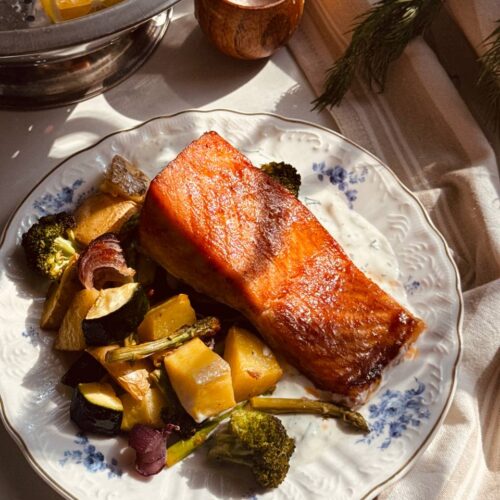
Salmon and Dill Sauce
Ingredients
For the Salmon
- 2 large salmon portions
- 1 tbsp ketchup
- 1 tbsp soy sauce
- 1 tsp olive oil
- Paprika to taste
- Dried garlic to taste
For the Roasted Vegetables
- 3 large young potatoes cut into large pieces
- 1 red onion cut into wedges
- A few broccoli florets
- 1 small zucchini cut into chunky pieces
- 70 –80 g asparagus
- Olive oil as needed
- Lemon juice for the asparagus
- Salt to taste
- Black pepper to taste
For the Greek Yogurt Dill Sauce
- 130 g Greek yogurt
- Fresh dill finely chopped, to taste
- 1 –2 tsp lemon juice
- Salt to taste
- Black pepper to taste
Instructions
- Preheat the oven to 200°C (390°F). Lightly grease a large baking sheet with olive oil.
- Cut the potatoes into large pieces and the red onion into wedges. Arrange them on the baking sheet, placing the potatoes cut-side down where possible. Drizzle with olive oil, season with salt and pepper, and bake for 15 minutes.
- Meanwhile, cut the broccoli into small florets and the zucchini into chunky pieces. Trim the tough ends from the asparagus, cut into three pieces, and season with a little lemon juice, salt, and pepper.
- Make the salmon glaze by mixing the ketchup, soy sauce, 1 teaspoon olive oil, paprika, and dried garlic. Brush the salmon generously with the glaze, reserving a little for later.
- After the potatoes have baked for 15 minutes, add the broccoli and zucchini to the baking sheet and drizzle lightly with olive oil. Add the glazed salmon and bake for 7 minutes.
- Add the asparagus and brush the salmon with the remaining glaze. Return to the oven for another 8 minutes, or until the salmon is cooked through and the vegetables are tender.
- Meanwhile, make the Greek yogurt dill sauce. Mix the Greek yogurt with fresh dill and 1–2 teaspoons lemon juice. Season with salt and black pepper to taste.
- Spread the creamy dill sauce generously over two plates. Top with the roasted vegetables and baked salmon. Serve immediately.
Notes
Adding the vegetables in stages helps everything finish cooking at the right time.
Salmon cooking time can vary depending on the thickness of the portions.
Start with 1 teaspoon of lemon juice in the yogurt sauce, taste, and add more if needed.
Fresh dill gives the dill yogurt sauce the best flavor.